
Assessment of breathlessness, heart function and treatment options in Hampshire
Heart condition
Heart Failure: Symptoms, Tests and When It's Reversible
When breathlessness or swelling needs urgent care
Call 999 for severe difficulty breathing, collapse, persistent heavy chest pain, blue or grey lips, or if someone is unresponsive.
Seek prompt medical advice for breathlessness that is getting worse, new difficulty breathing when lying flat, rapidly increasing swelling, coughing up frothy pink phlegm or a sudden increase in weight. Contact the heart-failure team or GP if available. NHS 111 can advise when urgent help is needed and the usual clinical team cannot be reached.
What is heart failure?
Heart failure means that the heart is not meeting the body’s needs as well as it should. It does not mean that the heart has stopped, or is about to stop.
The usual symptoms are breathlessness, tiredness and swelling of the feet or ankles. These symptoms are common and can have many causes. Heart failure should not be diagnosed from symptoms alone.
A heart scan often reports the ejection fraction. This is the percentage of blood pumped out of the heart’s main pumping chamber with each beat. A result of 55%, for example, does not mean that only 55% of the heart is working. A healthy heart never empties completely. You can read more in the ejection fraction result guide.
Some people with heart failure have a reduced ejection fraction because the main pumping chamber is not squeezing strongly enough. Others have a preserved ejection fraction, usually 50% or more, but the heart is too stiff or fills under too much pressure. A normal-looking percentage does not therefore rule out heart failure.
Can heart failure be reversed?
Sometimes. It depends mainly on what caused it and whether the heart muscle has been permanently damaged.
Heart function may improve when the cause can be corrected. Examples include a heart rhythm that has been too fast for a long time, heavy alcohol use, poorly controlled blood pressure, a thyroid problem, inflammation of the heart muscle or a severe heart-valve problem that can be treated.
If the heart’s pumping percentage returns to normal, that is encouraging. It does not always mean that the condition has been permanently cured. The heart may weaken again if treatment is stopped or the original problem returns. Doctors often describe this as recovered heart function rather than a cure.
The useful question is not simply, “Is heart failure reversible?” It is, “What caused my heart failure, and how much of that cause can be treated?”
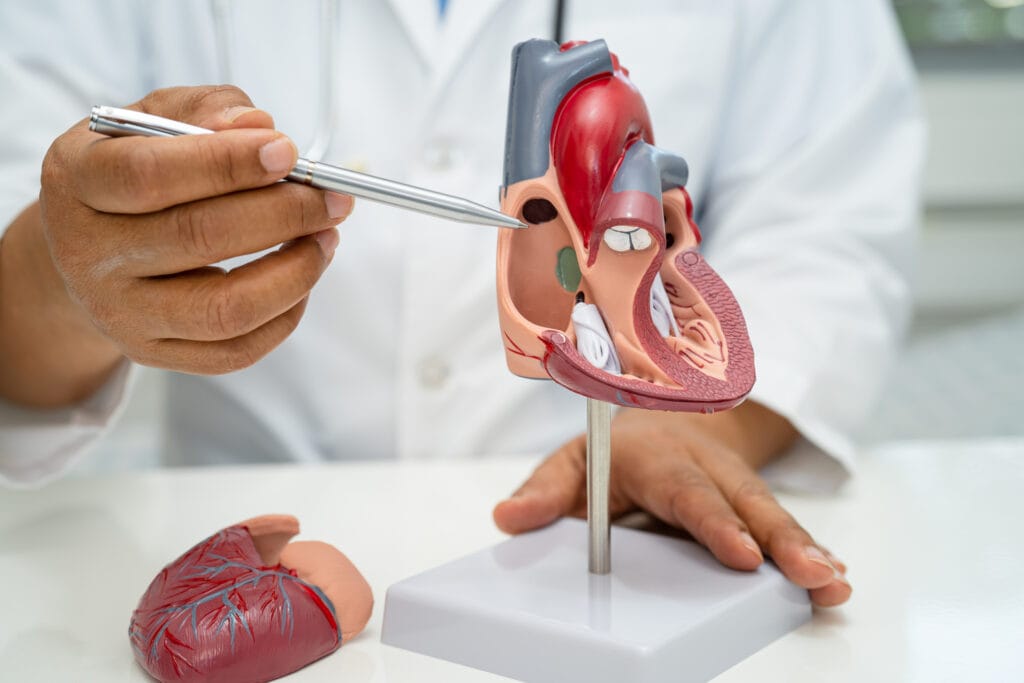
Common Symptoms of Heart Failure
Breathlessness
Difficulty breathing, especially when lying flat, during activity, or waking at night short of breath
Fatigue and Weakness
Persistent tiredness and reduced ability to perform daily activities or exercise
Ankle and Leg Swelling
Fluid retention causing swelling in feet, ankles, legs, or abdomen
Rapid Weight Gain
Gaining more than 2kg (4-5 pounds) in a week due to fluid accumulation
Rapid or Irregular Heartbeat
Palpitations or awareness of fast, irregular, or pounding heartbeat
Persistent cough
Chronic cough or wheezing, sometimes producing pink-tinged mucus
How heart failure is diagnosed
Diagnosis usually begins with a discussion of the symptoms, an examination, an ECG and blood tests.
An ECG records the heart’s electrical activity. It can show an abnormal rhythm, evidence of previous heart damage or an electrical pattern that may affect treatment.
A blood test called NT-proBNP measures a substance released when the heart is under strain. A raised result can support the suspicion of heart failure and help decide how quickly a heart scan is needed. It does not prove the diagnosis on its own. Age, kidney function, weight, heart rhythm and existing treatment can all affect the result.
An echocardiogram is an ultrasound scan of the heart. It shows how well the main chamber squeezes, how the heart fills and whether the valves are working properly. This is also where the ejection fraction is usually measured.
A cardiac MRI provides more detailed pictures of the heart muscle. It may help when the ultrasound pictures are unclear or when a cardiologist needs to look for inflammation, scar tissue or a particular heart-muscle condition.
Some people also need tests of the heart arteries or longer monitoring of the heart rhythm. The next test should answer a clear question rather than simply add another result.
Diagnostic assessments
- Blood tests (NT-proBNP, kidney function, thyroid and anaemia checks)
- Electrocardiogram (ECG)
- Echocardiography to assess heart structure and function
- Cardiac MRI when more detail is needed
- Exercise testing to assess how symptoms change with activity
- Assessment of the heart arteries when narrowing is suspected
- Longer ECG monitoring to look for abnormal heart rhythms
- Accurate classification of heart failure type depends on expert imaging
How heart failure is treated
Treatment depends on the cause, the scan findings, the symptoms and other health problems. There is no single prescription that suits everyone. The plan may combine medicines, treatment of the underlying cause, cardiac rehabilitation and follow-up heart scans.
Medicines that protect the heart
People whose main pumping chamber is weakened are often offered several medicines. This can feel like a long list, but each group has a different job.
- Medicines that relax blood vessels and reduce strain on the heart include ACE inhibitors, such as ramipril, and related treatments such as sacubitril with valsartan.
- Medicines that slow and protect the heart are called beta blockers. Bisoprolol is one example.
- Medicines that block a salt-retaining hormone include spironolactone and eplerenone. Kidney function and potassium levels need monitoring.
- Medicines first developed for diabetes include dapagliflozin and empagliflozin. They can also help many people with heart failure who do not have diabetes.
- Water tablets, such as furosemide, help the kidneys remove extra salt and water. They can improve swelling and breathlessness.
No one should start, stop or change these medicines on the basis of a web page. The choice and dose depend on blood pressure, kidney function, potassium levels, heart rate, symptoms and other medicines.
Treatment when the pumping percentage is preserved
Some people have heart failure even though the ejection fraction is 50% or higher. The heart may be stiff and need higher pressure to fill with blood.
Treatment may include water tablets if fluid has built up. Medicines first developed for diabetes, such as dapagliflozin or empagliflozin, can also help many suitable patients with this type of heart failure.
It is equally important to treat problems that place extra strain on the heart. These can include high blood pressure, atrial fibrillation, diabetes, kidney disease, coronary artery disease, excess weight and sleep apnoea.
Pacemakers and defibrillators
Some people with a persistently weakened heart need an implanted device.
A defibrillator monitors the heartbeat and can treat a dangerous rhythm if one occurs. A particular type of pacemaker can help the two sides of the heart pump in a more coordinated way.
These devices are not needed by everyone with a low ejection fraction. The decision also depends on symptoms, the ECG, the cause of the heart problem and whether the heart has improved after appropriate medicine treatment.
Treating the cause
Finding the cause can change both the treatment and the chance of recovery. Depending on the individual, this may mean:
- controlling a persistently fast or irregular heartbeat
- improving blood flow when the heart arteries are narrowed
- repairing or replacing a severely abnormal heart valve
- bringing high blood pressure under control
- stopping heavy alcohol use or another substance that is damaging the heart
- treating a thyroid problem or inflammation of the heart muscle
This is why the cause matters as much as the pumping percentage.
Frequently Asked Questions About Heart Failure
Understanding Heart Failure
What is heart failure?
Heart failure means that symptoms such as breathlessness, tiredness or swelling are being caused by a problem with the heart’s structure or function. It does not mean that the heart has stopped working. A diagnosis needs symptoms together with evidence from examination, blood tests or a heart scan.
Does heart failure mean I'm dying?
No. The term is frightening, but it does not mean that the heart is about to stop. Heart failure is a serious condition that needs proper assessment and treatment. Some people respond very well and remain active for many years. The individual outlook depends on the cause, severity and response to treatment.
How long can I live with heart failure?
There is no reliable answer from the diagnosis or ejection fraction alone. Outlook depends on the cause, the severity of symptoms, heart rhythm, kidney function, other illnesses and how well the condition responds to treatment.
Some people respond very well and remain active for many years. Others have advanced disease that continues to progress. Changes in symptoms, hospital admissions, blood results and heart scans over time give a more useful picture than a broad population statistic.
What is the difference between reduced and preserved ejection fraction?
Heart failure with a reduced ejection fraction means that the main pumping chamber is not squeezing strongly enough. In current UK guidance, this means a pumping percentage of 40% or less.
Heart failure with a preserved ejection fraction means that the percentage is 50% or higher, but symptoms are accompanied by other evidence that the heart is abnormal. The heart may be stiff or fill under too much pressure.
Both types can cause breathlessness, tiredness and fluid build-up. Their treatment is not identical.
What causes heart failure?
Common causes include a previous heart attack, long-standing high blood pressure, heart-valve disease, atrial fibrillation, inflammation of the heart muscle, heavy alcohol use and inherited heart-muscle conditions.
Finding the cause matters because some problems can be corrected or treated directly. It also helps a cardiologist judge how likely the heart is to recover.
Symptoms and Diagnosis of Heart Failure
What are the warning signs of heart failure getting worse?
Increasing breathlessness, new difficulty breathing when lying flat, rapidly worsening swelling, a sudden rise in weight and a marked fall in normal activity can all suggest fluid build-up or worsening heart function.
Call 999 for severe difficulty breathing, collapse, persistent heavy chest pain, blue or grey lips, or if someone is unresponsive. For a less severe but concerning change, contact the heart-failure team or GP. NHS 111 can advise if urgent help is needed and the usual team cannot be reached.
How is heart failure diagnosed?
No single test makes the diagnosis. A clinician combines the symptoms, examination, ECG, NT-proBNP blood test and an echocardiogram.
An ECG records the heart’s electrical activity. NT-proBNP measures a substance released when the heart is under strain. An echocardiogram is an ultrasound scan that shows how the heart pumps, fills and how the valves work. Other tests may be needed to find the cause.
Treatment and Management of Heart Failure
What medications will I need to take?
The combination varies from person to person. Medicines may be used to relax blood vessels, slow and protect the heart, block a salt-retaining hormone, help the heart and kidneys, or remove excess fluid.
Common examples include ramipril, bisoprolol, spironolactone, dapagliflozin and the water tablet furosemide. Each has a different job. The choice and dose depend on blood pressure, pulse, kidney function, potassium levels, symptoms and other medicines. Do not stop or change prescribed treatment without an individual plan.
Do I need to restrict salt and fluids?
Advice about salt and fluid should be personalised. Strict limits are not necessary for everyone and can sometimes create other problems.
The heart-failure team should explain whether a limit is needed and which change in symptoms or weight should prompt contact. Avoid making a major change on the basis of general online advice.
Can I still exercise with heart failure?
Most people with stable heart failure benefit from suitable exercise, particularly through a cardiac rehabilitation programme. This provides an individual assessment and a safe plan for building activity.
New or worsening breathlessness, swelling, chest pain, dizziness or fainting should be assessed before exercise is increased.
Will I need a pacemaker or defibrillator?
Some people with a persistently weakened heart benefit from an implanted device. A defibrillator monitors the heartbeat and can treat a dangerous rhythm. A particular type of pacemaker can help the two sides of the heart pump together more effectively.
The decision depends on the pumping percentage, symptoms, ECG findings, the cause and whether the heart improves after suitable medicine treatment.
Living with Heart Failure
What lifestyle changes will help most?
Useful measures include taking medicines as agreed, stopping smoking, moderating alcohol and keeping vaccinations up to date. A personalised cardiac rehabilitation programme can help someone return to suitable activity safely.
Advice should reflect the person’s symptoms, blood pressure, rhythm, kidney function and other conditions. There is no single lifestyle plan that suits everyone with heart failure.
Should I weigh myself daily?
Some people are advised to weigh themselves regularly because a rapid increase can be an early sign of fluid build-up. The team should explain how often to check and what change should prompt contact.
Weight is only one part of the picture. Increasing breathlessness, swelling and reduced activity also matter.
Can heart failure be reversed?
Heart function can improve substantially when the cause is treatable. Examples include a persistently fast heart rhythm, heavy alcohol use, poorly controlled blood pressure, a thyroid problem or a heart-valve problem that can be corrected.
Improvement does not always mean a permanent cure. Treatment and follow-up often continue because the heart can weaken again if treatment is stopped or the original cause returns.
Getting Expert Care
When should I see a heart failure specialist?
Specialist review is useful when heart failure is suspected, when the cause is unclear, after a new diagnosis, when symptoms are worsening or when treatment remains difficult to adjust. A cardiologist can check whether the heart is responsible for the symptoms and whether further tests would change the plan.
How can Dr Cassar help me with heart failure?
Dr Cassar can assess unexplained breathlessness, swelling, abnormal blood tests or concerns about a heart-scan result. He can review previous ECGs and scans, identify possible causes and arrange further investigation where appropriate.
What happens at a heart failure consultation?
The consultation begins with the pattern of symptoms, previous diagnoses, medicines and relevant family history. Examination, an ECG, blood tests and an echocardiogram may be considered depending on what is already available.
The aim is to confirm whether heart failure is present, understand its type and cause, and agree practical next steps.
How do I arrange a heart failure consultation?
The appointments page explains how to arrange a consultation with Dr Cassar. Severe or rapidly worsening symptoms should be assessed urgently through the NHS rather than waiting for a routine private appointment.
What resources are available for people with heart failure?
There are excellent resources to support you in managing heart failure:
- British Heart Foundation – Free booklets, online support community on HealthUnlocked, and cardiac nurse helpline: 0800 802 1234
- NHS Heart Failure Information – Comprehensive guidance on symptoms, treatment and living with the condition
- Pumping Marvellous Foundation – Charity specifically for heart failure patients with peer support
- Hampshire Hospitals Cardiac Rehabilitation – Programmes across Basingstoke, Winchester, Andover and Alton
Arrange a private consultation
Private consultations are held at Candover Clinic or The Hampshire Clinic, both in Basingstoke. Patients from Winchester are welcome.
Not an emergency service. Call 999 for a medical emergency. Do not wait for a private appointment. Medical information disclaimer.