
Consultant-led assessment of palpitations, irregular heartbeat and heart rhythm symptoms, with the right test for the pattern you describe.
Palpitations are one of the most common reasons patients see a cardiologist privately. Some people feel a thud or a flip, as though the heart has missed a beat. Others describe fluttering, racing, or pounding that seems disproportionate to what they are doing.
What matters is not just that the heart feels irregular, but the pattern: how it starts, how long it lasts, what brings it on, and what else happens alongside it. A single skipped beat felt at rest is usually a different problem to a racing heart that comes on abruptly and stops abruptly.
The pattern, triggers and associated symptoms matter more than the sensation itself, which is why a proper history is the starting point, not a formality before ordering tests.
Most palpitations are not an emergency. However, call 999 or go to A&E if palpitations occur with chest pain or tightness, fainting or loss of consciousness, severe breathlessness, a very fast heart rate that does not settle, or a known heart condition with new or worsening symptoms.
This page and a private consultation are for assessing palpitations that are troubling or unexplained but not producing those warning signs. No online description can safely rule out a serious cause.
Cardiac causes include ectopic beats, atrial fibrillation, supraventricular tachycardia and, less commonly, structural heart problems such as valve disease or cardiomyopathy.
Both ectopic beats and atrial fibrillation can feel very similar to the patient. Monitoring is often what distinguishes them reliably.
Anxiety and panic can produce a genuinely fast, forceful heartbeat. Caffeine, alcohol, some cold and decongestant medicines, thyroid overactivity, anaemia, dehydration, hormonal change, poor sleep and physical deconditioning can all contribute.
Assessment starts with a detailed history: when the palpitations occur, how they start and stop, their duration, any associated symptoms such as dizziness or breathlessness, family history, caffeine and alcohol intake, and any medications or supplements.
This is followed by clinical examination, including blood pressure, pulse character and heart sounds. The plan is then tailored to what the history suggests. Someone with brief, infrequent flutters at rest needs a different approach to someone with episodes of a fast heart rate lasting twenty minutes.
Over-investigating a benign pattern is as unhelpful as under-investigating a concerning one. If the history suggests a broader cardiology problem, Dr Cassar can also consider related conditions such as atrial fibrillation, coronary heart disease or heart valve disease.
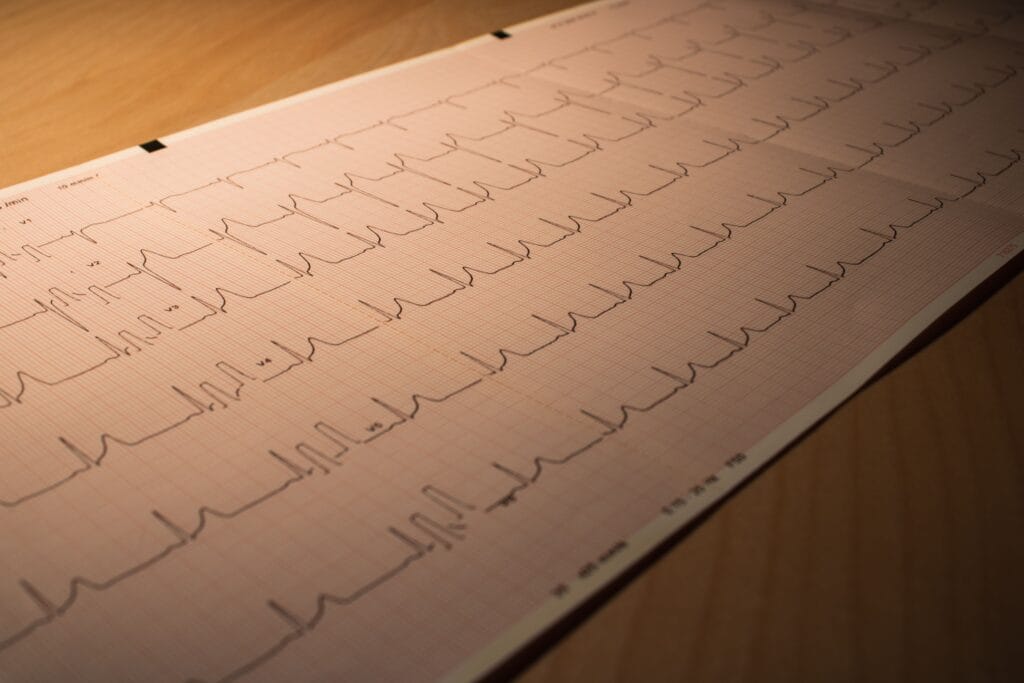
A snapshot of the heart's electrical activity. Most useful if symptoms are happening at the time.
Records the heart rhythm over days or weeks, depending on how often symptoms occur.
Looks at heart structure, function and valves where the history, examination or ECG suggests it is relevant.
Checks for reversible contributors such as thyroid dysfunction, anaemia and electrolyte disturbance.
No. Many palpitations are due to ectopic beats, anxiety, caffeine or other non-cardiac factors. Some are due to arrhythmias such as atrial fibrillation, so assessment is worthwhile if they are new, frequent or troubling.
Often, yes. A standard ECG captures only a few seconds. If palpitations are intermittent, a normal ECG between episodes does not rule out a rhythm problem.
Yes. Anxiety and panic can produce a rapid, forceful heartbeat. It is still worth assessing properly rather than assuming the cause, particularly the first time it happens.
Ectopic beats are early or extra individual beats, often felt as a thud or skip. Atrial fibrillation is a sustained irregular rhythm. They can feel similar, so monitoring is often needed.
Not necessarily. Tests are chosen based on the history and examination findings, not applied as a standard bundle.
Private appointments are usually available within days. If symptoms are occurring with red flags, seek emergency care rather than waiting for a routine appointment.
If palpitations are new, frequent or unexplained, a consultation can help clarify what is likely happening and what, if anything, needs monitoring. Appointments are available in Basingstoke and Winchester.