
Specialist assessment for breathlessness that is new, worsening, unexplained, or out of proportion to your fitness.
Symptom assessment
Private breathlessness assessment in Hampshire
Not an emergency service. Call 999 for a medical emergency. Do not wait for a private appointment.
Breathlessness that deserves a proper explanation
Breathlessness is common, but it should not be dismissed when it is new, progressive, or limiting day-to-day life. Some causes are cardiac, some are respiratory, and some relate to anaemia, thyroid disease, medication, weight, fitness or anxiety.
A private breathlessness assessment is useful when symptoms are recurring, unexplained, or have not been tied together into a clear plan. The aim is not simply to order tests, but to understand the pattern and decide which tests, if any, will actually answer the question.
When breathlessness needs urgent care
Call 999 or go to A&E if breathlessness is sudden, severe, rapidly worsening, or associated with chest pain, collapse, blue lips, confusion, coughing blood, or severe wheeze. The same applies if you cannot speak in full sentences or symptoms are clearly different from anything you have had before.
This page and private assessment are for stable, recurrent or unexplained breathlessness, not for acute respiratory distress or suspected heart attack, pulmonary embolism or severe infection.
What can cause breathlessness
Cardiac causes
Cardiac causes include valve disease, heart failure, abnormal heart rhythms, coronary artery disease and heart muscle conditions. These are especially relevant when breathlessness occurs on exertion, when lying flat, with ankle swelling, or alongside palpitations or chest discomfort.
Non-cardiac contributors
Lung disease, asthma, anaemia, thyroid disease, deconditioning, obesity, medication effects and anxiety can all produce genuine breathlessness. The skill is in separating these possibilities rather than assuming one explanation too early.
How Dr Cassar assesses breathlessness
The assessment starts with when breathlessness occurs, whether it is exertional or at rest, how quickly it has changed, and whether there are associated symptoms such as chest pain, palpitations, swelling, cough or wheeze.
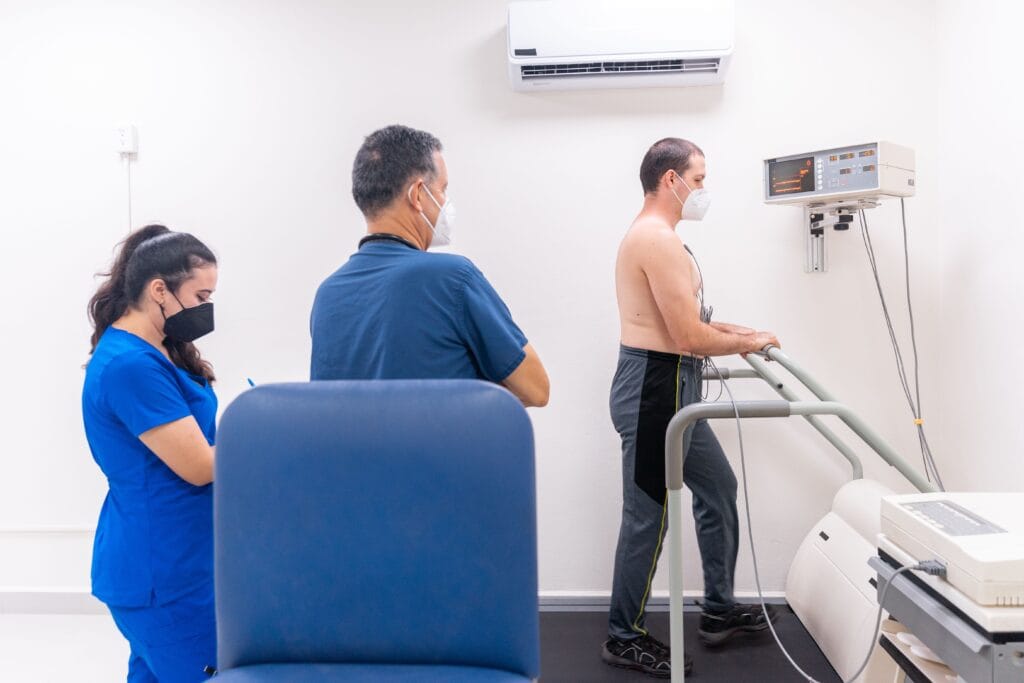
Dr Cassar will examine you, check your blood pressure, pulse and oxygen saturations where appropriate, and usually perform a resting ECG. Further tests are chosen according to the clinical pattern, not as a standard package.
Tests that may help
ECG
A resting tracing to look for rhythm abnormalities or signs that support a cardiac cause.
Echocardiogram
An ultrasound scan to assess heart function, valves, pressures and signs of heart failure.
Blood tests
Checks for anaemia, thyroid problems, kidney function and other reversible contributors.
Cardiac MRI and further imaging
Cardiac MRI, CT coronary angiography, chest imaging or other tests may be arranged when the clinical picture points beyond echocardiography.
Frequently asked questions
Can breathlessness be caused by the heart even without chest pain?
Yes. Valve disease, heart failure, heart rhythm problems and coronary disease can cause breathlessness without typical chest pain. The pattern of symptoms and examination findings guide which causes need excluding.
Is breathlessness always due to being unfit?
No. Deconditioning is common, but new or progressive breathlessness should not be put down to fitness until more important causes have been considered.
Do I need an echocardiogram for breathlessness?
Often, but not always. An echocardiogram is useful when the history, examination, ECG or blood tests suggest a possible structural heart or valve problem.
Can anxiety cause breathlessness?
Yes. Anxiety and hyperventilation can cause very real breathlessness and chest tightness. It should be considered after the clinical pattern has been assessed properly.
What if my chest X-ray was normal?
A normal chest X-ray is reassuring but does not exclude cardiac causes, asthma, anaemia, rhythm problems or valve disease. It is one piece of the assessment, not the whole answer.
When should I seek emergency help?
Seek urgent help if breathlessness is severe, sudden, rapidly worsening, associated with chest pain or collapse, or if you are unable to speak in full sentences.
Book a private breathlessness assessment
If breathlessness is stable but unexplained, a consultation can help clarify whether the heart is involved and what testing is sensible. Private consultations are held at Candover Clinic or The Hampshire Clinic, both in Basingstoke. Patients from Winchester are welcome. Call to ask about current availability.
Or call 020 3198 9826 or email medicalsecretary@drcassar.co.uk
Not an emergency service. Call 999 for a medical emergency. Do not wait for a private appointment. Medical information disclaimer.