
A monitor worn for 24 hours that measures blood pressure repeatedly through the day and night.
Cardiac investigation
24-hour blood pressure monitoring (ABPM)
What this test is and when it helps
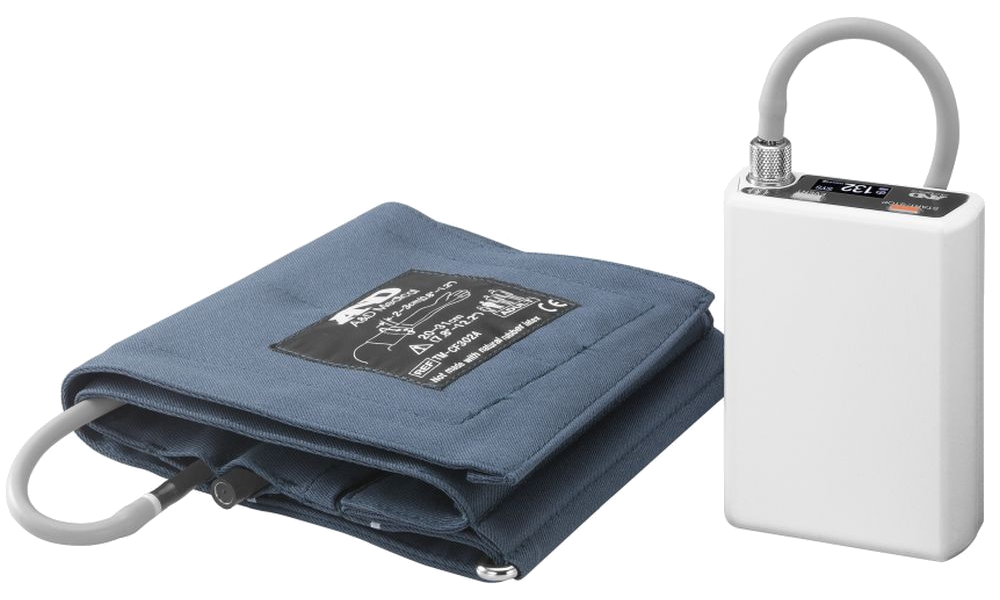
Ambulatory blood pressure monitoring (ABPM) uses a cuff on the upper arm, connected to a small recorder, that takes blood pressure readings automatically while you go about your usual day and while you sleep.
It is most often used to confirm whether a high clinic reading means high blood pressure (hypertension). It is also used when clinic and home readings disagree, when treatment does not seem to be working as expected, or to check blood pressure control.
Dr Mark Cassar personally interprets the recording, allowing the readings to be considered alongside your symptoms, medicines, other risk factors and any heart findings.
This differs from a single clinic reading and from home monitoring, where you take your own readings at set times. It is often followed by an electrocardiogram (ECG) or echocardiogram to look for effects on the heart.
What 24-hour monitoring can assess
Average blood pressure
The report gives average readings for the day and for the night, which are more reliable than any single reading.
White-coat and masked hypertension
White-coat hypertension means readings are higher in the clinic than in everyday life. Masked hypertension is the reverse: clinic readings look normal but blood pressure is raised at other times.
Pattern through the day and night
The recording shows how blood pressure changes with activity and sleep.
Important clinical distinctions
Averages, not single readings
A single high reading, for example while climbing stairs, does not decide the result. Interpretation uses averages from enough valid readings.
Diagnosis, targets and individual readings
The level used to diagnose high blood pressure is not the same as a treatment target, and neither is a single reading. Daytime, night-time and whole-recording averages are not interchangeable, so each is read for its own purpose.
What happens during the test and how results are interpreted
The cuff is fitted to your upper arm and the recorder is worn on a belt or strap. The cuff inflates by itself at set intervals through the day and night. Each inflation squeezes the arm briefly, which can be uncomfortable, and it may wake you at night. Keep your arm relaxed and still during each reading, and follow the fitting instructions. Most monitors cannot get wet, so bathing, showering and swimming are usually avoided.
You may be asked to keep a diary of activities, sleep times and symptoms, so that unusual readings can be understood. Do not stop or change your medicines because of the test unless the clinician arranging it tells you to.
The recorder is returned and the readings downloaded. The report summarises the averages and the number of valid readings, and is interpreted with clinic readings and your wider health. It describes one day, so an unusual day may need the test to be repeated. If the monitor is not suitable or not tolerated, home blood pressure monitoring is an alternative.
When another test may be needed
Home blood pressure monitoring
Readings taken at home over several days when 24-hour monitoring is unsuitable or not tolerated.
Blood and urine tests
Check the kidneys and other risk factors when high blood pressure is confirmed.
ECG and echocardiogram
Look for effects of blood pressure on the heart, such as thickened heart muscle.
Frequently asked questions
Why do I need this if my GP has taken several readings?
Repeated clinic readings are still clinic readings. Monitoring shows your pressure across a normal day and night.
Will it disturb my sleep?
It can. The cuff inflates during the night as well. Note any very disturbed nights in your diary.
Can I carry on with my usual activities?
Yes, apart from anything that would wet the monitor. Normal activity is expected, and readings will rise a little with exertion.
Do I stop my blood pressure tablets for the test?
No. Do not stop or change medicines unless the clinician arranging the test tells you to.
What if I have an unusual day?
Tell the team and note it in your diary. If there are too few valid readings, the test may be repeated.
Discussing whether blood pressure monitoring is appropriate
Dr Mark Cassar can review your readings, symptoms and previous results, and arrange 24-hour blood pressure monitoring where clinically appropriate. The page on high blood pressure explains assessment and treatment.
Or call 020 3198 9826 or email medicalsecretary@drcassar.co.uk
Not an emergency service. Call 999 for a medical emergency. Do not wait for a private appointment. Medical information disclaimer.