
A portable recording of the heart's rhythm over a day or longer, used when symptoms come and go.
Cardiac investigation
Holter and ECG monitoring
What this test is and when it helps
Ambulatory ECG monitoring records the heart's electrical activity while you go about normal life. The best-known version is the Holter monitor, a small recorder connected to sticky patches on the chest that records every heartbeat, usually for 24 to 48 hours.
It may be recommended for palpitations, dizziness, blackouts or unexplained breathlessness, particularly when a resting ECG is normal. It is also used to look for irregular rhythms such as atrial fibrillation, including episodes you cannot feel, and to review rhythm in an established heart condition.
Dr Mark Cassar personally interprets the recording, allowing the rhythm to be considered alongside your symptoms, examination findings and other tests.
This differs from a resting ECG, which records only a few minutes, and from an echocardiogram, which shows the structure of the heart rather than its rhythm.
What ambulatory monitoring can assess
Rhythm during symptoms
The recording can show what the heart was doing at the time you noted a symptom, which helps decide whether a rhythm problem is the cause.
Rhythm without symptoms
It can detect fast, slow or irregular rhythms and pauses that you did not feel.
Rate range and extra beats
The report describes the range of heart rates and the number of extra beats, called ectopic beats. These are common and do not always need treatment.
Important clinical distinctions
Choosing the type of monitor
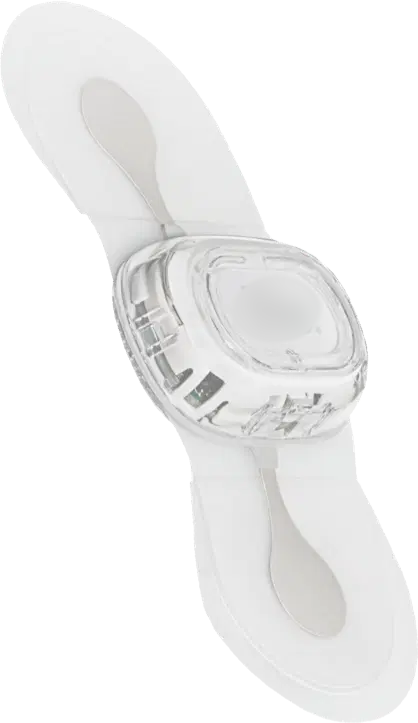
A conventional Holter records continuously, usually for 24 to 48 hours. Longer-wear patches record for longer. An event recorder is activated by you when symptoms occur, and suits episodes too infrequent for a continuous recording. In selected cases a small recorder can be placed under the skin for much longer monitoring. The choice depends on how often symptoms happen and what question needs answering.
A recording is only as useful as the symptoms it catches
If symptoms are infrequent, a short recording may be normal simply because nothing happened. A normal rhythm recorded during your typical symptoms is useful information. A normal rhythm on a symptom-free day does not exclude an intermittent rhythm problem.
What happens during monitoring and how results are interpreted
The skin is cleaned, patches are attached and the recorder is worn on a belt or in a pocket. You wear it day and night and continue your usual activities. A conventional Holter must usually stay dry, so ask how to manage washing before you leave. Sticky patches can irritate the skin, so mention sensitive skin or reactions to plasters.
You note the time of any symptoms in a diary, or press the event marker if your device has one. This marks the recording and does not call for help.
The recorder is returned and the recording analysed afterwards. A routine recording is not watched live, so do not wait for the result if you become unwell. The report summarises heart rates, pauses, fast or irregular rhythms and extra beats, with your symptom times marked, and is interpreted with the clinical picture. A fixed monitoring period cannot be guaranteed to find the cause.
When another test may be needed
Resting ECG
Records the electrical activity at a single point and can show persistent changes between episodes.
Echocardiogram
Assesses the heart's structure and pumping function, which helps when a rhythm disturbance is found.
Longer or event recording
Considered when symptoms did not occur during the first recording.
Frequently asked questions
Can I shower or exercise while wearing the monitor?
It depends on the device. A conventional Holter usually must not get wet. Ask at the fitting which activities are fine, and do not remove or adjust the recorder unless you have been shown how.
Does anyone watch the recording as it happens?
Not with a routine recording. It is analysed after the recorder is returned.
What if I have no symptoms while wearing it?
The recording still shows the rhythm for that period, but it may not answer the original question. A longer or event recording may then be considered.
What if a patch comes off?
Contact the team that fitted the monitor as soon as you can. They will advise whether it can be refitted. Write down the time of any symptoms anyway.
Do I need to prepare?
There is usually no special preparation. Take your usual medicines unless you are told otherwise.
Discussing whether monitoring is appropriate
Dr Mark Cassar can review your symptoms, examination findings and previous results, and arrange ambulatory monitoring where clinically appropriate.
Or call 020 3198 9826 or email medicalsecretary@drcassar.co.uk
Not an emergency service. Call 999 for a medical emergency. Do not wait for a private appointment. Medical information disclaimer.