
If you are wondering whether chest pain is a heart attack or heartburn, the sensation alone may not tell you. A burning feeling is often put down to indigestion, but it is also a recognised way a heart attack can present. The NHS symptom list for a heart attack includes a burning feeling in the chest, along with fullness and bloating. It also includes the more familiar tight or crushing pain. This is why “it feels like heartburn” cannot safely rule out a heart attack. If you or someone with you has sudden chest pain that does not go away, call 999. This is especially true with sweating, nausea, light-headedness or breathlessness, or if pain spreads to the arm, neck, jaw, stomach or back. A suspected heart attack needs emergency assessment. It is not something to work out at home based on how the pain feels.
Why heartburn and a heart attack can feel alike
Heartburn and cardiac chest pain overlap because both can cause a burning or tight feeling in the chest. The sensation alone does not tell you where it is coming from.
It also helps to drop the idea that a heart attack always looks like it does on television. Central, crushing chest pain is common, but it is not the only pattern. Some people notice discomfort in the upper abdomen, back, jaw or arm instead. Others find that breathlessness, nausea, sweating or light-headedness are the more obvious symptoms. The absence of “classic” central pain does not rule out a heart attack.
When to call 999
Call 999 for sudden chest pain or discomfort that does not go away, whether it feels like squeezing, pressure, burning or indigestion. Also call if the pain spreads to either arm, the neck, jaw, stomach or back. Chest pain with sweating, nausea, light-headedness or shortness of breath also needs emergency help.
If a heart attack is a realistic possibility, do not drive yourself to hospital. Call 999 and let the call handler guide what happens next. Do not wait for the pain to settle, and do not try a treatment at home before seeking help. Emergency assessment is the safe way to answer the question.
Clues that make reflux more likely, without proving it
Some features do make heartburn a more plausible explanation. Reflux-type discomfort often comes with a sour or acidic taste in the mouth. It tends to appear after eating, and is frequently worse when lying flat or bending forward. A pattern that reliably follows meals, and is worse lying down, makes reflux more likely.
These are clues, though, not a diagnosis. None of them are specific enough to safely exclude a cardiac cause on their own. They should not become a home checklist for deciding whether emergency care is needed. Call 999 if the discomfort is sudden and does not go away, is severe, or comes with any of the warning features above. That is true however convincingly it resembles reflux.
What happens at hospital
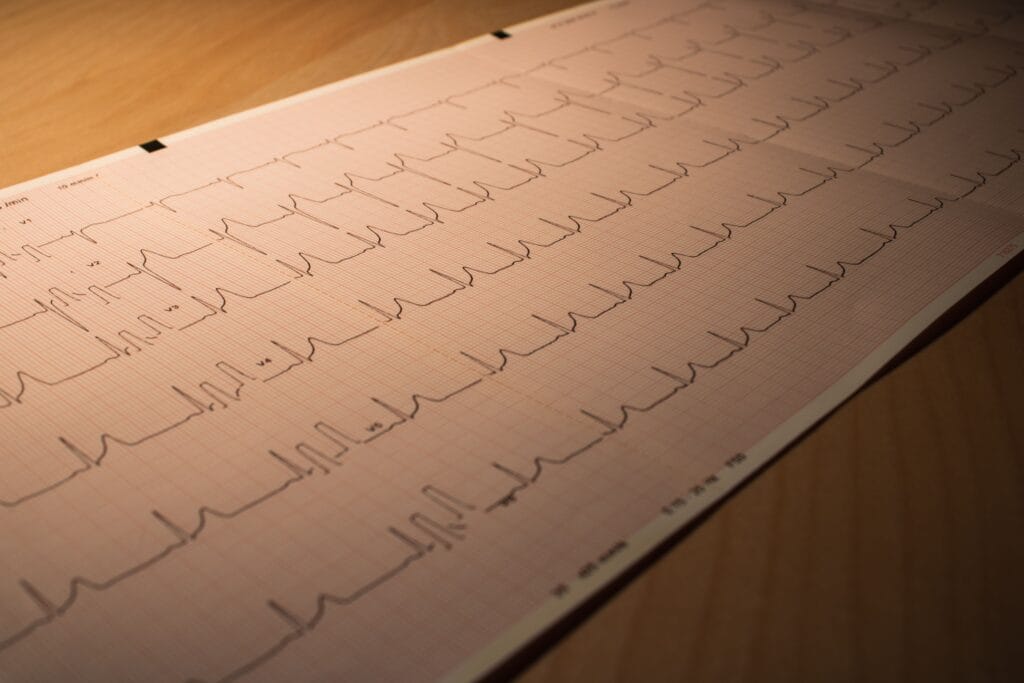
Suspected heart attack assessment in hospital typically includes an ECG and blood tests. These usually include a troponin measurement, which detects a protein released when heart muscle is damaged. Depending on the timing and result, this test may be repeated.
One point causes genuine confusion. A normal ECG recorded early on does not exclude a heart attack. It also does not rule out other urgent problems caused by reduced blood flow to the heart, grouped under the term acute coronary syndrome. The ECG is only a snapshot of the heart’s electrical activity at that moment. Some significant problems simply do not show up on the first tracing. This is why hospital teams often combine the ECG with blood tests taken over time, alongside clinical assessment. They rarely rely on any single result on its own.
Chest pain is not always the heart
A heart attack is one of several conditions that can cause sudden, severe chest pain and need emergency treatment. It is not the only one. Emergency teams consider other urgent causes alongside a heart attack. That is part of why hospital assessment, rather than a symptom checklist, is the right way to work out what is happening. For more on what else can cause chest pain, and how a cardiologist approaches the possibilities, see the chest pain and when to call 999 page.
If the pain has settled and you are not sure
Once an urgent cause has been assessed, recurrent discomfort still deserves an explanation. Burning that reliably follows meals may need review for reflux. Chest discomfort that comes and goes, or keeps returning after an emergency assessment, should also be discussed with a clinician. Call 999 if a new, more severe or different episode has any of the warning features above.
Reflux is common. But a previous label of heartburn should not close the question if the pattern changes or develops other concerning features. A planned chest pain assessment looks at the history, examination and appropriate testing together. More detail is available on the private chest pain assessment page.
Dr Mark Cassar can assess stable, recurrent or unexplained chest discomfort in clinic, and arrange further tests where appropriate. If you would like a personalised review, the cardiology appointments page has details on arranging a consultation.
Questions patients often ask
Can a heart attack feel like heartburn?
Yes. A heart attack can cause a burning sensation in the chest, along with fullness or bloating, which can feel very similar to indigestion. This overlap is well recognised. Burning chest pain should not be assumed harmless when it is new, severe or comes with other concerning symptoms.
What clues make heartburn more likely than a heart attack?
A sour taste in the mouth, symptoms that reliably follow meals, and discomfort that worsens lying down or bending forward all fit better with reflux. These features make heartburn a more plausible explanation. But they do not rule out a cardiac cause on their own. That is especially true if the pain is new, severe, or comes with sweating, breathlessness or spreading pain.
If antacids ease the pain, does that prove it is heartburn?
No. Relief after an antacid should not be used to decide whether emergency care is needed. If a heart attack is a realistic possibility, call 999 rather than waiting to see whether an antacid helps.
Does a normal ECG rule out a heart attack?
Not on its own. An ECG recorded early can be normal even when a heart attack or another acute coronary problem is present. This is because it only shows the heart’s electrical activity at that exact moment. Hospital assessment typically combines the ECG with blood tests, often repeated over time, and clinical judgement.
What should I do if I’m not sure whether it’s my heart?
If the symptoms could be a heart attack, call 999. This includes sudden chest pain that does not go away, spreading pain, or chest pain with sweating, nausea, light-headedness or breathlessness. Chest pain that comes and goes, or settles quickly but still worries you, should be discussed with your GP.