
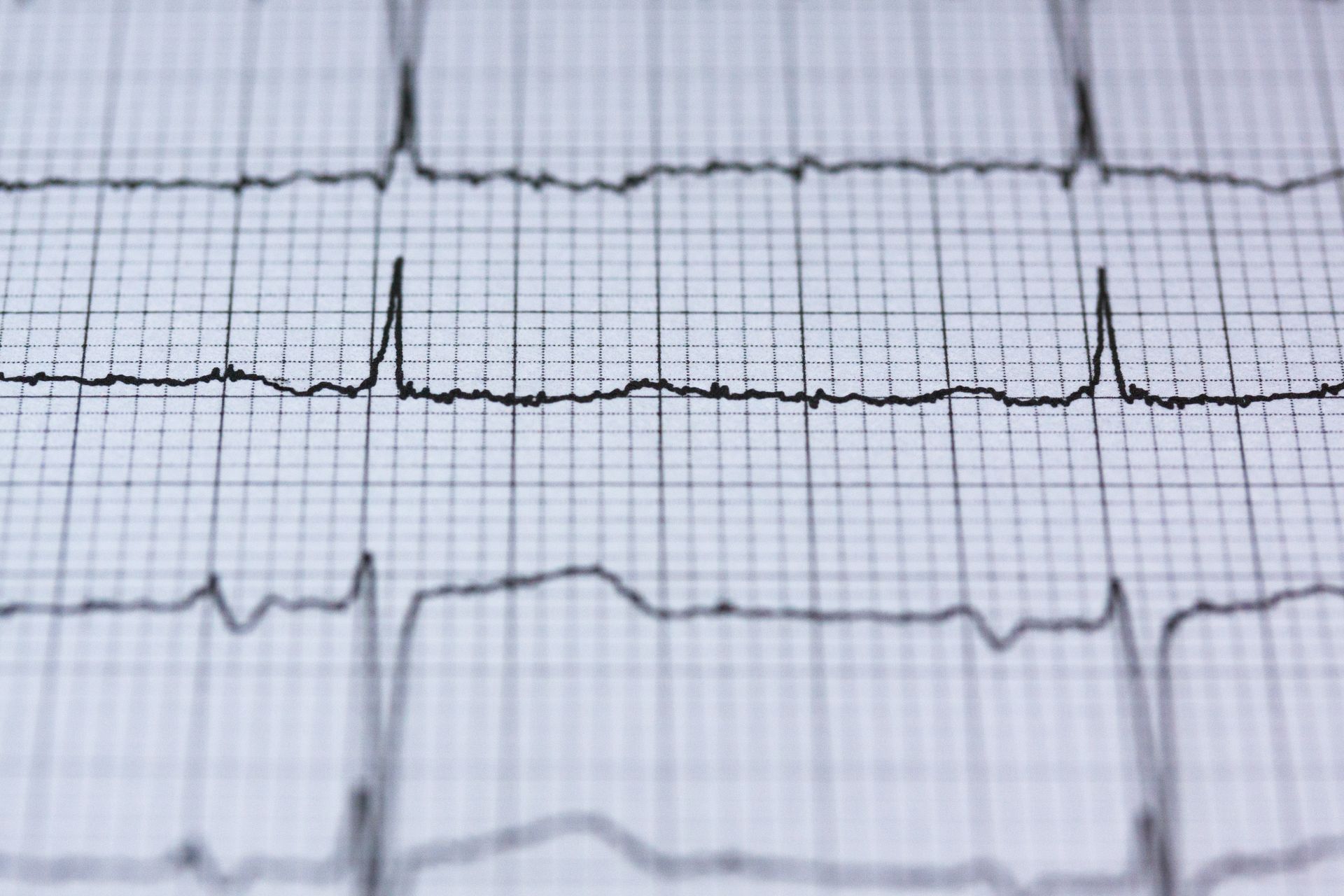
ECG series, part 3 of 3. Part 1: abnormal ECG result. Part 2: left bundle branch block.
Right bundle branch block, often shortened to RBBB, means the electrical signal that makes your heart beat travels more slowly than usual to the right side of the heart. It shows up as a recognisable pattern on an ECG. In many people it is found by chance, causes no symptoms and does not need treatment. Whether it matters depends on whether the rest of the heart is normal, which is why it is sometimes followed by a heart scan.
What is the right bundle branch?
Each heartbeat starts with an electrical signal at the top of the heart. The signal passes down two pathways, the right and left bundle branches, so that both pumping chambers contract together. In RBBB, the right pathway conducts slowly or not at all. The signal still reaches the right ventricle, but by a slightly longer route through the heart muscle, so that side of the heart is activated a fraction of a second later.
You cannot feel this delay. It changes the shape of the ECG tracing, not the way your heart feels.
Complete and incomplete RBBB
An ECG report may say complete or incomplete RBBB.
- Incomplete RBBB shows a similar ECG pattern with a shorter delay. It is common in younger and fitter people, and is often a normal variant when it is isolated. It does not necessarily progress to complete RBBB.
- Complete RBBB is the full pattern. It becomes more common with age and is still often harmless, but it is more likely than the incomplete form to prompt a heart scan, particularly if it is new compared with an earlier ECG.
The label can vary between ECGs, because the pattern is affected by heart rate and by exactly where the stickers are placed.
Right and left bundle branch block compared
RBBB and LBBB are both delays in the heart's wiring, but they mean different things. RBBB is common and usually harmless when the rest of the heart is normal. LBBB is less common and more often linked to high blood pressure, heart muscle disease or coronary artery disease, so it is usually followed by a heart scan. Part 2 of this series covers LBBB.
What causes it?
Often no cause is found, and RBBB becomes more common with age. Possible causes include:
- conditions that strain the right side of the heart, such as raised pressure in the lungs or long-standing lung disease
- a hole in the heart present from birth, such as an atrial septal defect, which may go unnoticed until adulthood
- coronary artery disease or a previous heart attack
- heart muscle conditions (cardiomyopathy)
- previous heart surgery or a heart procedure
- some medicines, such as certain heart rhythm drugs, which can slow conduction
A sudden new RBBB with breathlessness or chest pain can occasionally be caused by a blood clot in the lungs (pulmonary embolism) or a heart attack, which is why those symptoms need emergency help.
RBBB in young adults
Incomplete RBBB is a common finding in fit young adults and athletes and is usually a normal variant. Symptoms, other ECG abnormalities or a concerning family history can still mean further assessment is worthwhile, even when the pattern looks typical for age. Complete RBBB in a young person is also often harmless, but an echocardiogram is often sensible, mainly to check for a hole in the heart, which can cause no symptoms for many years.
Is right bundle branch block serious?
In someone with no symptoms and an otherwise normal heart, RBBB is usually harmless. It deserves a closer look when:
- it is new compared with an earlier ECG, or newly found with no earlier ECG to compare it against
- you have breathlessness, chest pain, dizziness or blackouts
- a doctor has heard a heart murmur
- the ECG shows another conduction problem as well, sometimes called bifascicular block
When to seek urgent help
Call 999 if you have sudden chest pain or discomfort that does not go away, particularly with sweating, feeling sick or breathlessness, or if you have severe difficulty breathing.
If someone faints, call 999 if they do not come round within a minute, have not fully recovered, have chest pain or a pounding or irregular heartbeat, are seriously injured, have a seizure, or faint during exercise or while lying down.
A faint or blackout alongside a known bundle branch block needs urgent medical assessment, even once you have recovered. Contact your GP or NHS 111 the same day and mention the ECG finding, rather than waiting for a routine appointment. This needs an urgent specialist cardiovascular referral. If you are awaiting specialist assessment after a blackout, do not drive until you have been advised it is safe.
A new RBBB found alongside chest pain or sudden breathlessness needs the same emergency assessment as the symptoms themselves; do not wait for an ECG result to decide whether to seek help.
What happens next
The first step is to compare the ECG with any earlier tracings, if available, and ask about symptoms. A pattern that looks new may simply be newly discovered, especially if there is no earlier ECG for comparison. The need for a scan depends on your symptoms, examination and the rest of the ECG, particularly if the RBBB is new compared with an earlier tracing. An echocardiogram may be recommended to check the heart's structure and pumping and look for an underlying cause.
If you have had dizziness or blackouts, a 24-hour ECG or longer heart monitor can look for intermittent slowing of the heart rhythm. The recording length depends on how often symptoms happen. A normal short recording does not rule out a problem that comes and goes infrequently; longer monitoring or other specialist tests may be needed.
RBBB itself is not treated. Any treatment is for an underlying condition, if one is found.
When might a pacemaker be needed?
RBBB on its own does not usually need a pacemaker. If the ECG shows RBBB together with a delay in part of the left-sided wiring, called bifascicular block, the heart's electrical system is more widely affected. Most people with this pattern still never need a pacemaker, but one may be considered if more serious conduction disease develops, such as intermittent or advanced heart block, or if blackouts or a slow heart rate occur in that setting.
Outlook
When RBBB is isolated and assessment finds no underlying heart disease, the outlook is often reassuring. Long-term risk depends on your wider heart and lung health. When another condition is found, its severity and treatment are important to the outlook.
See Dr Cassar about this
Dr Mark Cassar can review your ECG and symptoms, and advise whether right bundle branch block needs further investigation.
- Adults (18 and over), at Candover Clinic and The Hampshire Clinic, Basingstoke
- First appointments usually within a week
- Initial consultation £250, follow-up £150; tests are charged separately
- Call 020 3198 9826 or email [email protected]
Frequently asked questions
What does right bundle branch block mean?
That the electrical signal reaches the right side of the heart slightly late. It changes the ECG pattern but is not felt.
Is incomplete right bundle branch block normal?
In young and fit people it usually is. It is rarely a reason for further tests on its own, though new symptoms or other ECG changes may still warrant a closer look.
Can right bundle branch block go away?
It can come and go in some people, particularly incomplete RBBB, and the pattern may vary between ECGs.
Can I exercise with right bundle branch block?
If you have no symptoms and your heart is otherwise normal, RBBB is not usually a reason to limit exercise. New symptoms on exertion should be assessed.
Is there a diet for right bundle branch block?
There is no specific diet. A heart-healthy diet helps with causes such as high blood pressure and coronary artery disease; see the Mediterranean diet and heart health.
Can medicines cause RBBB?
Some antiarrhythmic medicines can slow electrical conduction and alter the ECG. Your clinician will review whether a medicine might be contributing. Do not stop a prescribed medicine yourself; discuss any concerns with the prescriber.
What if I have RBBB and atrial fibrillation?
They are separate findings. The atrial fibrillation needs its own assessment and treatment. Whether the RBBB needs additional assessment depends on your symptoms and the rest of the ECG, particularly if there are blackouts or a slow heart rate.
Can I drive with right bundle branch block?
For car and motorcycle drivers, RBBB on its own does not usually affect your licence, provided there is no other disqualifying condition. Symptoms such as blackouts may change this. Bus, coach and lorry licences have separate, stricter requirements, and whether these apply depends on your individual ECG and any associated conditions, so check the current DVLA guidance or ask your doctor.
Does RBBB need a pacemaker?
Not usually on its own. A pacemaker may be needed if more widespread conduction disease is found, causing a slow or unpredictable heart rhythm.